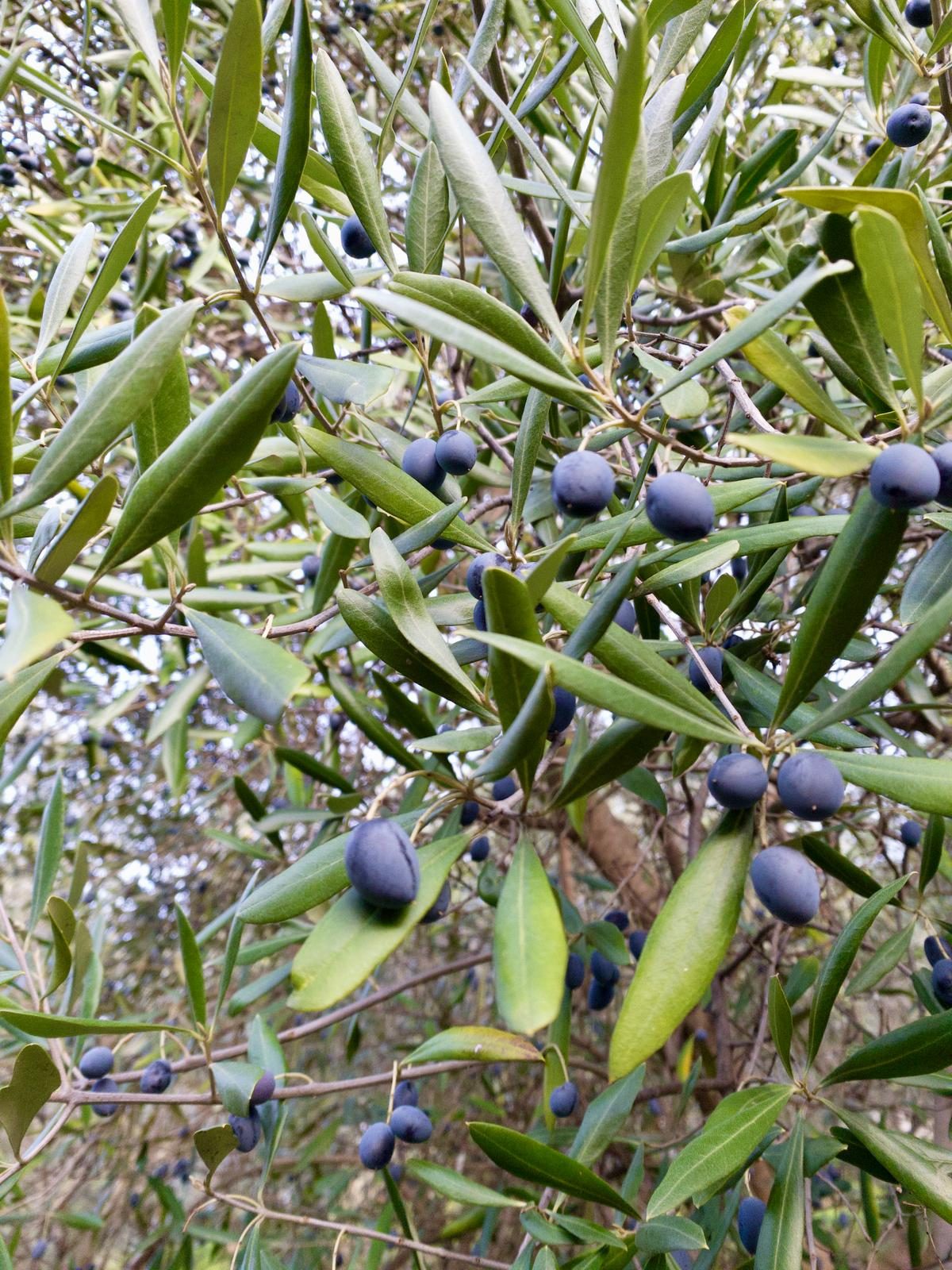
extra virgin is not a compliment a producer pays itself. it is a legal grade with three exams to pass — and the third one, the one almost nobody has heard of, is taken by human beings, tasting.
In Italy you will see the abbreviation EVO everywhere. It stands for extra vergine di oliva, it caught on because it is short and sounds technical, and in law it does not exist: the category is called extra virgin olive oil, and that is what has to be printed.
The category itself, though, is defined with real precision. It is worth understanding, because it is exactly the difference between two bottles sitting on the same supermarket shelf at four times the price of one another.
the ladder: not all olive oil is the same
Oils made from olives are distinct legal categories, in descending order.
- extra virgin olive oil: obtained by mechanical means only, with no chemical treatment, and free of defects when tasted.
- virgin olive oil: the same mechanical extraction, but with perceptible defects below a set threshold. Rarely sold at retail.
- olive oil: the category that misleads most people, because the name sounds like the plain, innocent one. It is in fact a blend of refined oil with a small share of virgin.
- olive pomace oil: made from the solid residue of milling, using solvents, then refined.
The third one is the point to take away. When a bottle says only "olive oil", it is not using a friendly shorthand for extra virgin: it is declaring a lower grade, in which the main component has been refined.
what refining does
An oil that fails the exams for virgin gets refined: deacidified, bleached, deodorised by physical and chemical means. What comes out is edible, stable, almost entirely without taste or smell — and without polyphenols, the antioxidant molecules that are the reason extra virgin olive oil is studied as a health food at all.
To give it some flavour, a share of virgin oil is blended back in. The result is what the label calls "olive oil". It is neither illegal nor unsafe: it is simply a different product, and it costs less for excellent reasons.
"refining does not hide the defects. it erases them — and everything else with them."
the three exams
To be called extra virgin, an oil has to pass three checks. The first two happen in a laboratory. The third does not.
1. free acidity: no more than 0.8%
The most quoted figure and the most misunderstood one. You cannot taste it: free acidity has nothing to do with a sour flavour. It measures how many fatty acids have broken away from their structure — in other words, how much the fruit degraded between the tree and the bottle. Bruised olives, olives hit by the fruit fly, or olives left sitting in crates for days all push this number up.
The legal ceiling for extra virgin is 0.8 grams per 100 grams. It is a generous ceiling: a well-made oil sits far below it. Ours is around 0.2%.
2. peroxide value: no more than 20
This measures how far oxidation has gone — how much the oil has already aged by meeting oxygen. If acidity tells you what happened to the olives before milling, peroxides tell you what happened to the oil afterwards: light, heat, air, careless racking, clear bottles left under shop lighting.
3. the panel test: the exam taken by people
This is the part hardly anyone knows about, and it makes extra virgin a rare case in food law: a commercial grade defined partly by the sensory judgement of human beings.
A group of trained tasters — the panel — assesses the oil in blue glasses, so that colour cannot influence them. Two conditions have to be met: the median of defects must be zero, and fruitiness must be greater than zero.
In plain terms: having no faults is not enough. It also has to taste of olives. An oil that is chemically impeccable but mute on the palate is not extra virgin.
The defects have precise names, and once learned they are recognisable by non-experts too: fusty (olives fermented after waiting too long), musty, muddy sediment (oil left sitting on its own deposit), winey, rancid. That last one is by far the most common in domestic kitchens, and most people fail to notice it because they have grown used to it.
bitterness and pepper are not faults
Worth saying plainly, because it is the misunderstanding that makes people throw away the most good oil: bitterness, and the burn at the back of the throat, are not signs that an oil has gone off or is "too strong". They are polyphenols, and they are the best part of it.
The peppery catch in the throat in particular comes from oleocanthal. An oil that does not bite at all is an oil low in antioxidants — gentler, and less interesting nutritionally as well as on the palate.
Rancidity is something else entirely: it smells of old walnuts, of forgotten butter, and it does not bite at all.
what to actually read on the label
- the full category: it must say "extra virgin olive oil", not just "olive oil".
- the origin: "blend of olive oils of EU origin" means the origin is not traced. A producer who knows where their oil comes from writes it down, usually in large letters.
- the harvest year: more useful than the best-before date, which is an administrative calculation. Oil is at its best in the twelve to eighteen months after milling.
- dark glass or tin: light is the first enemy. A clear bottle on a lit shelf is a problem regardless of what is inside.
why the price cannot lie
A quick sum closes the argument better than any rhetoric. It takes between six and ten kilos of olives to make one litre of extra virgin olive oil. To that add the pruning, the harvest, the transport, the milling, the filtering, the bottle, the cap, the label, and the shipping.
When an extra virgin costs four euros a litre, one of those steps was paid for by somebody else — almost always by whoever picked the olives. That is not a moral argument. It is arithmetic.
frequently asked questions
what does EVO stand for?
EVO is an Italian commercial abbreviation of "extra vergine di oliva", extra virgin olive oil. It is widely used in Italy but it does not appear in legislation: the official category is "extra virgin olive oil", and that is what has to be printed on the label.
what is the difference between extra virgin olive oil and olive oil?
They are two different legal grades. Extra virgin is obtained by mechanical means only, has free acidity no higher than 0.8% and must be free of defects when tasted. Plain "olive oil" is a blend of refined oil with a small share of virgin oil: refining removes the defects, but also the aroma, the flavour and the polyphenols.
is olive oil that burns my throat bad?
No, the opposite. The peppery burn comes from polyphenols, in particular oleocanthal, which are the oil's antioxidants. An extra virgin that bites is usually young and rich. The fault to learn instead is rancidity, which smells of old walnuts or stale butter and does not bite at all.
how long does extra virgin olive oil last?
The best-before date is usually eighteen months from bottling, but the date that matters is the harvest: the oil is at its best in the twelve to eighteen months after milling. Kept in the dark, cool and tightly closed it lasts far longer than one left beside the hob, which can turn rancid in weeks.
what is the panel test?
It is the sensory exam set out in European law: a group of trained tasters assesses the oil in blue glasses, which hide its colour. For the oil to be classified extra virgin, the median of defects must be zero and fruitiness greater than zero. It is the only case in which a commercial food grade depends on human judgement as well as chemical analysis.